
CASE STUDY
When the Product IS the Message
Competitive Positioning for the Stalker Street Dynamics TDC 2
Type: Sales Enablement / Competitive Positioning / Collateral Design
Company: Stalker Street Dynamics (Applied Concepts, Inc.)
Role: Marketing Communications Supervisor
Timeline: Concept to print-ready in under one week
The Product
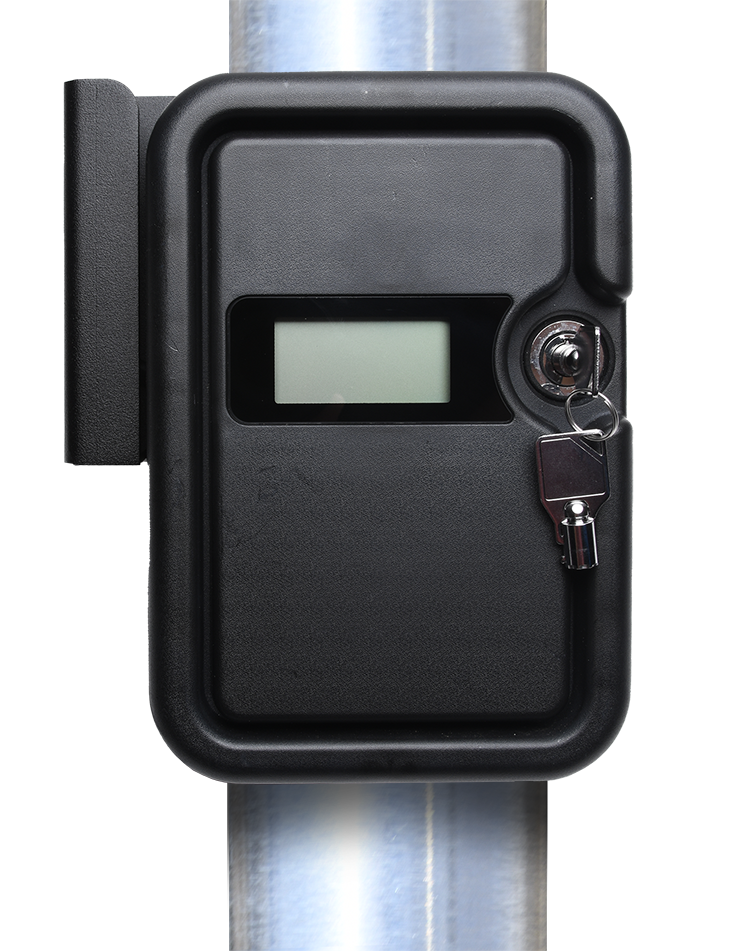
The Traffic Data Collector 2 (TDC 2) is a radar-based traffic data collection device made by Stalker Street Dynamics. It captures vehicle speed, direction, and counts, and with an optional 4G connection, sends that data directly to the Street Dynamics Web Portal for remote access, reporting, and analysis.
It is used by public works departments, city planners, HOAs, schools, and law enforcement agencies to support traffic enforcement efforts, infrastructure planning, grant applications, and community safety initiatives.
It is also, notably, the smallest and lightest traffic data collector on the market. Approximately the size of a thick paperback novel. Matte black. Barely noticeable to passing drivers- which is exactly the point.
The Market Problem
The traffic data collector market has multiple competitors with competent, capable products, such as Traffic Logix, Kustom Signals, All Traffic Solutions, and Houston Radar. But their products are also all large, silver, visually prominent metal housings that announce their presence to every driver who passes them. They are bulky and more difficult to install.
The TDC 2, on the other hand, is small, lightweight, and essentially invisible. It also installs in minutes by a single person, runs on an internal 8-day battery, relocates easily across a city's trouble spots, and fits in a hardshell case that is approximately the size of a mass-market paperback novel.
The problem wasn't that customers didn't value our product’s features.
The problem was that our marketing hadn't figured out how to make them feel those things before a rep ever opened their mouth.
The Insight
I was doing what I always do before creating sales collateral: talking to the people who actually sell the product.
In a conversation with one of our traffic product reps, I asked him what most reliably triggered a customer's interest in the TDC 2. He told me customers were consistently surprised and intrigued the moment he walked into a public works department carrying it. They expected something large and unwieldy, because that's all they'd ever seen. Instead, here was this compact, discreet device that fit in one hand.
The size wasn't just a feature. It was a moment. A reveal.
A few minutes after that conversation, it hit me: the TDC 2 was smaller than most of our existing brochures. We had a perfectly serviceable folded 11x17 brochure that covered everything comprehensively- specs, features, portal integration, the works. But comprehensive isn't the same as compelling.
What if the brochure itself was the size of the TDC 2?
The Strategic Decision
I want to be honest about a decision I made here that the company might not have agreed with.
The engineering team was (and still is!) extremely proud of the TDC 2's MIL-STD-810H Transit Drop Test Certification. It's a legitimate achievement and a genuine quality signal. But durability is a table-stakes expectation in this market. Every serious competitor offers rugged housing. Leading with the drop test certification would be technically accurate and strategically inert- it doesn't differentiate, and it doesn't make a customer's eyes light up.
Size does.
Size creates an immediate, visceral, physical "aha" moment that no spec sheet can replicate. And I had a way to deliver that moment before a rep said a single word: put the brochure in their hands.
I also made a deliberate choice about what kind of piece this would be. I think of collateral as falling into two categories: comprehensive leave-behinds and arrows. Leave-behinds are detailed, informative, designed for the customer who wants to know everything. Arrows are designed to catch attention and direct it → to a website, to a conversation, to a sales rep who can follow up.
We already had the leave-behind. What we needed was an arrow.
The TDC 2-sized brochure was built to be an arrow. Its cover is printed at the exact dimensions of the TDC 2's face. When a rep hands it to a potential customer, the size is the headline before they even read a word.
The Execution
I made a mockup and brought it to the Director of Marketing. He loved it. So did the reps when we shared it. So did the president of the company.
The interior of the brochure is deliberately concise- a brief but thorough overview of the TDC 2's key features and the Street Dynamics Web Portal, which the company also wanted to promote as a subscription product. The combination of hardware and portal is genuinely powerful: data collected in the field flows directly to a dashboard where city planners, public works departments, and law enforcement can access reports, charts, and analysis remotely without ever touching the device.
The brochure communicates that power simply. It doesn't try to be the leave-behind. It tries to make the customer want to learn more, and then it gets out of the way.
From concept to print-ready file: less than one week.
The Outcome
Multiple reps have told me they love using it, and that customers respond to it immediately. It performs particularly well at trade show booths, where standing out in a sea of identical folded brochures is its own competitive advantage.
Perhaps more importantly, it gives reps a natural conversation-starter on solo sales visits. When you're meeting with one or two people in a public works department, leaving something behind that they can easily pass to a colleague or a supervisor - something that communicates the core value proposition in a glance - means that the brochure gets shared and understood with or without the rep’s presence.
What This Taught Me
The best marketing insight I've developed over the years is this: customers will tell you exactly how to sell to them, if you know how to listen.
The rep wasn't giving me a marketing brief. He was just describing what happened when he walked into a room. But buried in that description was everything I needed: the trigger that both caught the customer’s eye and also set us clearly apart from the competition in just one glance.
I could make the customer want the product before the rep even had to say one word.
That's what product marketing is, at its core. It’s not creating desire from nothing, but instead, listening for the customer to subtly express their desire (in a few words, in a furrowed brow, in the content of a question), and then presenting your product in a simple, elegant way that captures their attention, answers their questions, and promises that their desires will be satisfied and their needs will be met- by your brand, your product, and the entire purchase experience.